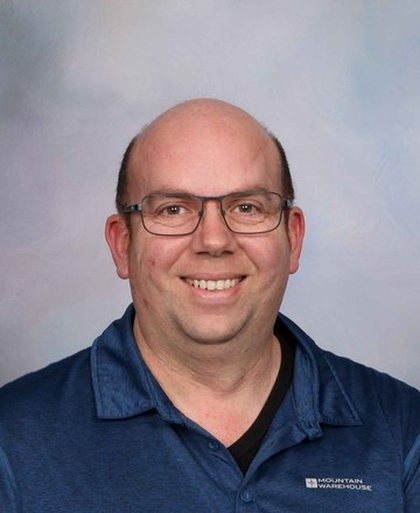
High expectations.
I teach at Piopio Primary School in the King Country, and I'm working toward school leadership. This is the work I care most about.
Teaching in a small rural school means wearing many hats and knowing every learner well. I plan for the child in front of me — building on their strengths, meeting them where they are, and holding a high bar because I believe they can reach it.
Good teaching, to me, is equal parts warmth and structure. Children do their best learning when a classroom feels safe and predictable, and when the adults around them are calm, consistent, and genuinely interested in who they are.
My teaching philosophy
Every ākonga (student) in Aotearoa brings a unique kete (basket) of knowledge, culture, and potential to the classroom. My role as an educator is to cultivate a learning environment where that potential is nurtured through equitable, evidence-based, and culturally responsive practice. I am deeply committed to the principles of Te Tiriti o Waitangi — partnership, protection, and participation — and to reflecting the holistic, student-centred vision of the refreshed New Zealand Curriculum (Te Mātaiaho).
Embracing diversity and culturally responsive pedagogy
True inclusion goes beyond acknowledging difference; it means actively valuing and drawing on the diverse identities in the room. By prioritising whanaungatanga (building relationships) and manaakitanga (care and respect), I work to create a safe, welcoming space where every ākonga feels they belong. Whether the context is cultural diversity, neurodiversity, or differing socio-economic backgrounds, my approach is proactive — I weave mātauranga Māori and local histories into everyday teaching so learning stays relevant and children see themselves reflected in it. A diverse classroom is an asset that enriches learning for everyone.
Equity through structured literacy
Literacy is a fundamental right and the cornerstone of educational equity. My approach to reading and writing is rooted in the Science of Reading and delivered through a Structured Literacy framework: explicit, systematic, sequential instruction across phonemic awareness, phonics, fluency, vocabulary, morphology, and comprehension. Moving away from balanced literacy toward evidence-based practice means no child is left to guess. This is especially vital for neurodiverse learners, such as those with dyslexia, while giving every ākonga the decoding and comprehension skills they need to access the wider curriculum and succeed in life.
Empowerment through assessment for learning
I see assessment not as an endpoint but as a continuous, collaborative engine for growth. My practice is driven by Assessment for Learning, which shifts ownership from teacher to learner. In practice that means:
- Co-constructing success criteria — so ākonga understand what they're learning and what success looks like.
- High-quality, timely feedback — specific and actionable, focused on the task and the learning, not the person.
- Student agency — empowering ākonga through peer and self-assessment to identify their own next steps.
- Responsive teaching — using formative data daily to adjust my instruction to students' real, immediate needs rather than following a rigid plan.
Toward leadership
My goal is to step into primary school leadership. I'm drawn to it for the same reasons I enjoy teaching: the chance to set a clear direction, support the people doing hard and important work, and build a culture where both children and staff can thrive.
The projects I take on outside school — building and shipping software, running an online community, leading events — have taught me a great deal about the practical side of leadership: planning, communicating clearly, seeing things through, and staying steady when things don't go to plan.
In the press
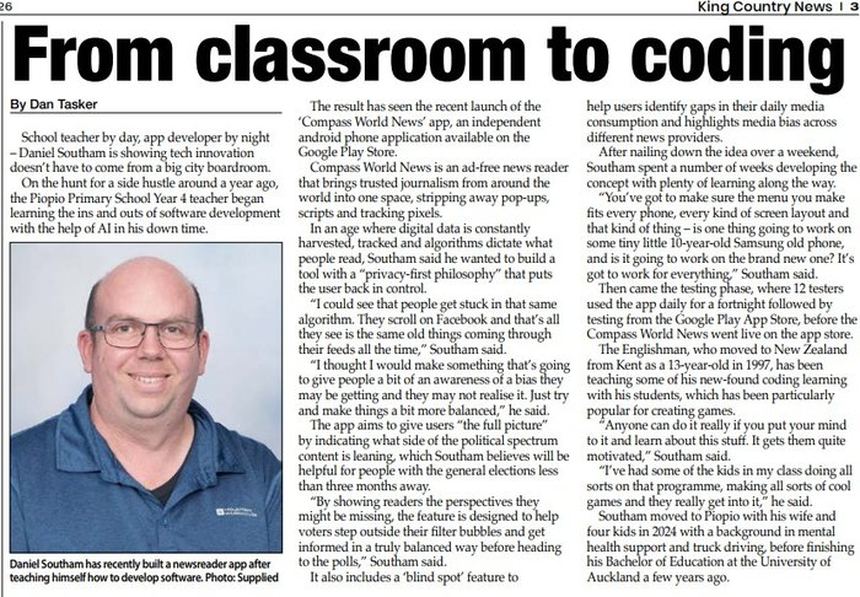
“From classroom to coding”
King Country News ran a feature on the side project I mentioned above: teaching myself app development in my own time, with AI as a learning partner, and shipping Compass World News — a privacy-first, ad-free news reader for Android that shows readers how different outlets are covering the same story. The app went through a fortnight of testing with a group of local testers before launching on Google Play ahead of this year's general election.
“I thought I would make something that's going to give people a bit of an awareness of a bias they may be getting, and they may not realise it. Just try and make things a bit more balanced.”
By Dan Tasker · King Country News, page 6
Training & qualifications
- Bachelor of Education (Primary) — University of Auckland, 2023
- Better Start Literacy Approach (BSLA) — University of Canterbury
- Liz Kane Structured Literacy — completed 2026
- MindLab Digital Passport — digital fluency across the curriculum
Breadth of experience
My training took me through classrooms from Year 2 to Year 7/8 across four different schools, so I've taught across a wide span of the primary years. Before training as a teacher, I spent several years working directly alongside people with additional and complex needs. That background shaped how I teach: I notice quickly when a child needs something different, and I'm comfortable adapting on the spot rather than sticking rigidly to a plan.
Leading beyond the classroom
Each year I organise and run Piopio's Got Talent, our school's talent show. It's become one of the highlights of the school calendar, drawing in students from every year level and support from the local community. Running it end to end — from getting students signed up to the night itself — is exactly the kind of planning and follow-through I'd bring to a leadership role.
What I bring
Relationships first
Trust with children, families, and colleagues is the foundation everything else is built on.
Clarity & follow-through
Clear expectations, communicated well, and the discipline to carry them through to the end.
Calm under pressure
Steady, solution-focused thinking when the day doesn't go to plan — which it often doesn't.
Lifelong learner
I model curiosity by living it, always taking on something new and seeing it through.
If you'd like to talk about teaching or leadership opportunities, I'd welcome the conversation — you can reach me at email me.